
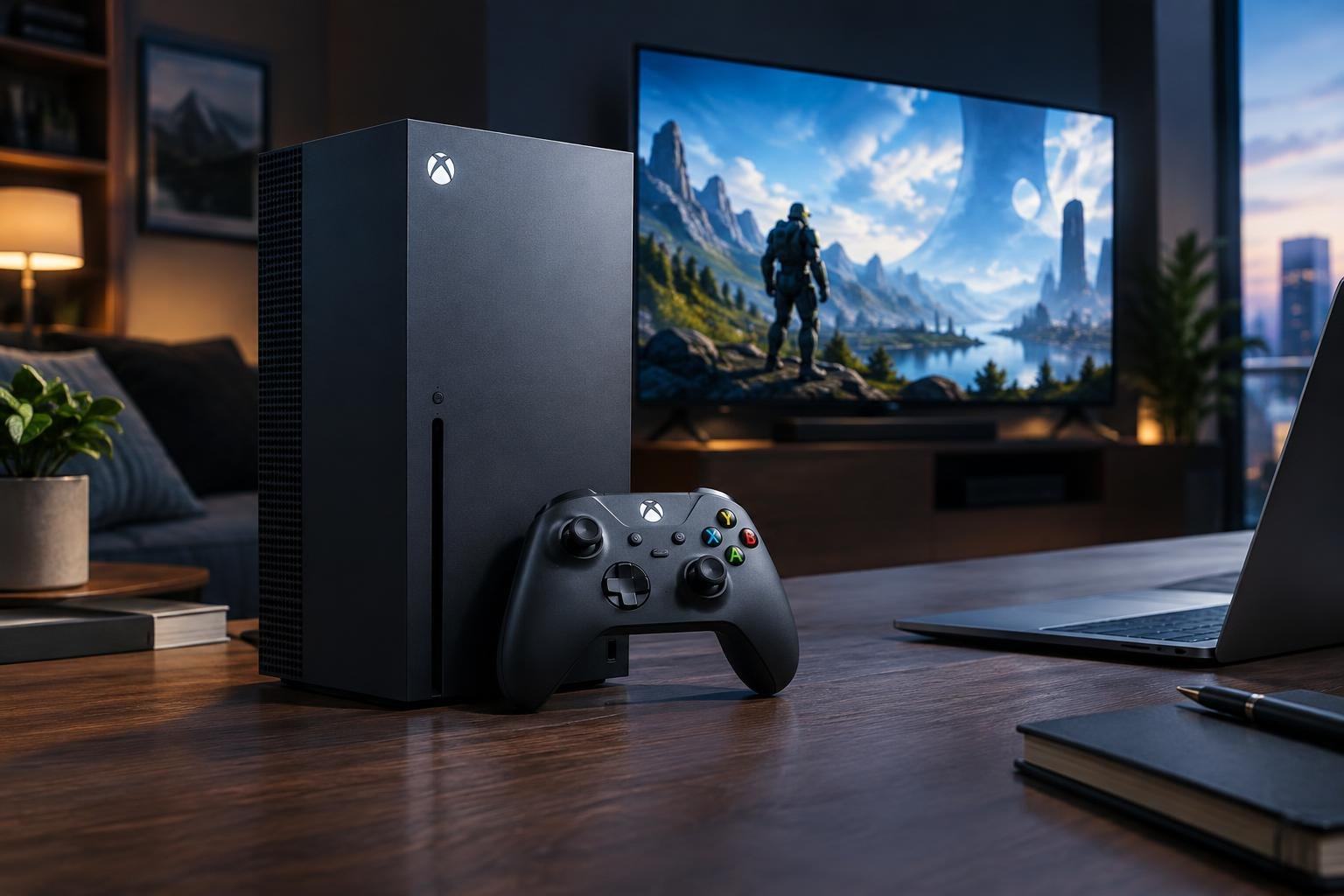
For decades, a game console has made a simple promise: buy one box, plug it in, and play. A reported price of $1,200 to $1,800 for Microsoft’s next Xbox would complicate that promise. It is a range more commonly associated with premium computers than with a mass-market living-room machine.
The figure is not an announced price, and Microsoft has not confirmed a launch date or specifications in the supplied reporting. The report points to 2028 as a target. But even as a possibility, the price raises a revealing question: is Xbox trying to sell more consoles—or redefine what a console is?
When the box becomes the business
Xbox is not just a device maker. Its business includes game studios, publishing and a subscription service, Game Pass. Microsoft’s acquisition of Activision Blizzard in 2023 brought major franchises such as Call of Duty, World of Warcraft and Overwatch into the fold, making the company’s gaming operation larger and more complicated.
Yet hardware remains central: former Xbox employees cited in the reporting say consoles still account for about 80% of the business. That creates a strategic bind. Microsoft needs the console to attract players into its wider ecosystem, but a machine priced at the top end of the market could make that first step harder.
The pressure is already visible. Current-generation Xbox consoles have sold a little more than a third as many units as PlayStation 5 consoles, according to third-party estimates cited in the report. Meanwhile, memory-chip shortages have pushed hardware costs higher, and Microsoft’s measure of Xbox profit margin has been around 3%—well below what the company typically expects from major businesses.
A premium machine, or a smaller audience?
A high price could be one response to the economics. More expensive components and the cost of building powerful hardware do not disappear simply because customers expect consoles to be affordable. A premium device might generate more revenue per sale, particularly if it offered something that players could not get from cheaper alternatives.
But no such features or technical specifications have been confirmed here, so the price range alone cannot tell us what Microsoft may be planning. And a higher price has a basic drawback: it can shrink the pool of people able or willing to buy the machine. That matters especially for a platform whose value depends not only on hardware sales, but on players buying games, subscribing and bringing friends into its online world.
Xbox has already been trying to connect those pieces more effectively. Game Pass helped build recurring subscription revenue, but former employees say it could also undercut sales of full-price games, particularly when they first launched. Different teams tracking subscription and store revenue added another tension. In other words, the challenge is not simply to sell a better box. It is to make the whole system work together.
The console is also a promise
That is the task now facing Asha Sharma, who took charge of Xbox in February after Phil Spencer. Sharma comes from outside the video-game industry and has begun a broad restructuring, including layoffs, studio consolidation and a sharper focus on major franchises and publishing groups. The work is unfolding inside a business Microsoft must make more profitable—and a brand watched closely by players who care about its history.
A console launch is more than a hardware release. It is a promise that a company will keep investing in its platform: that games will arrive, services will endure and the device will feel worth buying years after its debut. For Xbox, a premium-priced machine could strengthen that promise if it delivers enough value. If not, it could make the platform feel less accessible just as Microsoft needs to rebuild momentum.
The reported price and 2028 target remain possibilities, not a product announcement. Still, they expose the central puzzle in Xbox’s turnaround: can Microsoft make gaming hardware pay without making the gateway to its games too expensive? The next Xbox’s most important specification may be not its power, but the audience its price leaves on the other side of the door.