
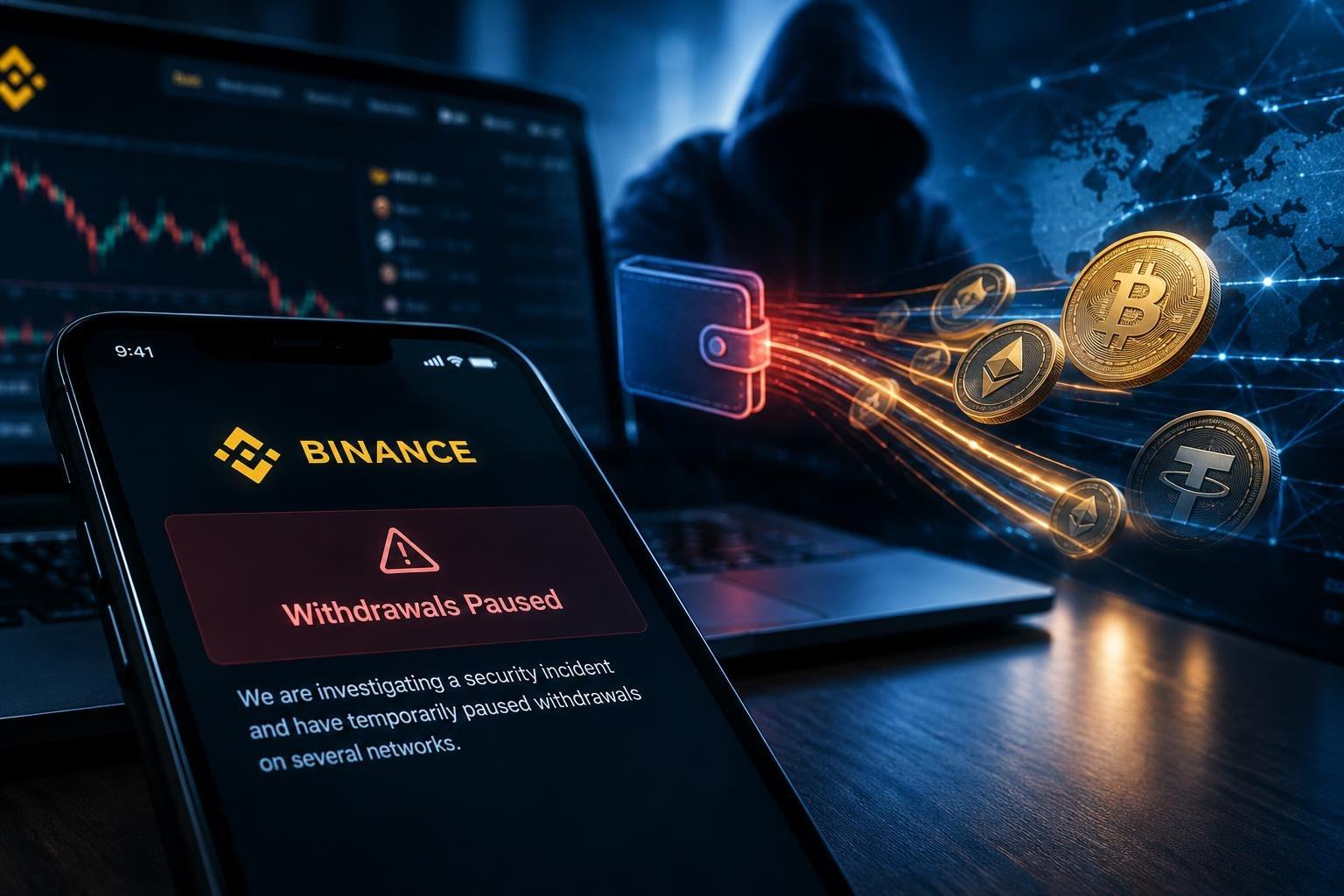
A cryptocurrency exchange can look like a single vault. In practice, moving money in and out depends on a network of digital wallets—and when one part of that system may be compromised, even routine withdrawals can become a risk. Binance, the world’s largest crypto exchange, has temporarily suspended withdrawals on multiple networks while investigating a security incident.
The exchange says it is aware of reports of a potential security issue and is reviewing the information. It has also said users’ funds are safe. But crypto watchers say at least $2 billion may have been drained from Binance’s internet-connected wallets, with some estimates putting possible losses above $5.7 billion. Those figures remain unconfirmed, and the reported theft may still be unfolding.
Why an exchange might close the exit
Binance spokesperson Ross O’Leary said the withdrawal suspension was a precaution following the incident. That can frustrate customers, but it may also limit the damage while security teams work out what happened: if funds are moving through a vulnerable route, temporarily closing it can make further transfers harder.
The wallets at the center of the reports are known as hot wallets. Unlike cold wallets, which are kept offline, hot wallets connect to the internet so an exchange can process transfers more quickly. The convenience comes with a trade-off: an online wallet is exposed to digital threats in a way an offline device is not. Exchanges generally use multiple layers of security and storage, but the details of Binance’s incident have not been disclosed.
So far, Binance has not identified a suspected attacker or explained how the incident occurred. Changpeng Zhao, the exchange’s founder and largest shareholder, said on X that he believed it had likely been hacked and expected customer funds to be fully covered. Zhao no longer runs the company, and his statement did not explain the basis for that expectation.
Freezes can slow crypto—but not settle the question
There is one sign that some funds may have been intercepted. The source material reports that Circle froze about $800 million in Tether as it moved through its networks, while Tether froze about $1.56 billion related to the Binance incident. These reported actions could prevent some assets from being moved or used, but they do not establish the total amount stolen or recovered.
That distinction matters because crypto transfers can be difficult to reverse once they are completed. Some digital assets, including certain stablecoins, can be frozen by their issuers in particular circumstances. But a freeze is not the same as returning funds to customers, and the reported figures may not represent separate sums that can simply be added together.
For now, the size of the loss is the story’s biggest uncertainty. The lower estimate would already make this a major breach; the higher one would place it among the largest in crypto history. In 2025, hackers stole a record $1.4 billion in a single breach from the exchange Bybit, an incident blamed on North Korean hackers. There is no attribution for the Binance incident in the information released so far.
A warning about trust as well as technology
Binance has urged users to rely on its official channels and be wary of unsolicited messages, links or requests for account information. That advice is especially important during a crisis: uncertainty creates an opening for scammers posing as support staff or promising a way to recover funds.
A separate incident on Thursday underlined how much crypto services can depend on outside software. Prediction market Polymarket briefly halted trading and paused withdrawals after a third-party company was compromised. Security researchers said the incident led to around $2 million in user funds being stolen through software developed by DebugBear. It is not known to be connected to the Binance case.
The immediate questions are whether Binance can account for the reported movements, how much—if anything—can be recovered, and when suspended withdrawals will resume. Until those answers are verified, the exchange’s reassurance and the alarming estimates remain in tension. In crypto, a wallet may be digital, but trust is the thing customers are waiting to see restored.